I was certain that I had processed the car accident entirely. I wrote until I had nothing left to say, recognized the strength of my body as it healed in the months that followed, expressed deep gratitude daily. As far as traumatic experiences go, that was one I thought had already been dealt with. It wasn’t until I got to Greece that I began to question whether or not I’d truly faced it in its entirety. Consistent yoga classes in Paros reminded me how weak my right arm still felt, despite the years that passed since it was broken. Feelings of anger and frustration began to fester in my heart.
Then, one afternoon in Santorini, I decided to hike down to the sea. I walked fearfully, taking note of the slippery steps. It was like I thought the fear into reality. I slipped on a smooth rock and caught myself with the palm of my left hand to brace my body from the fall. I heard a pop in my shoulder as it jutted toward my neck. My chest tightened as I gripped my left bicep strong with my right hand, pulling my arm close to my torso for support. My breath became quick, exhales shallow, with forceful inhales that typically precede heaving tears.
Once I caught my breath, shaken but undeterred, I continued with with my plan for the day, using my right hand as a sling to keep my left arm in place as I moved. When I eventually sat to rest, tension in my neck and excruciating pain in my back forced me to recline. It was impossible to sit up straight. The tightness in my chest, which dissipated while I explored the island, returned with a vengeance. The physical discomfort was eclipsed by the realization that, years after the car accident, I was still struggling with the consequences of the physical injuries I had sustained then. My heart sank in my chest when I thought of the persistent stiffness and weakness I felt in my right shoulder. Healing my left shoulder suddenly felt impossible. I was overcome with emotion – fear that I would never fully recover from either injury, sadness about the state of my body, guilt for having put myself in a dangerous situation. I sat, frozen, while my feelings tied themselves into knots in my chest.
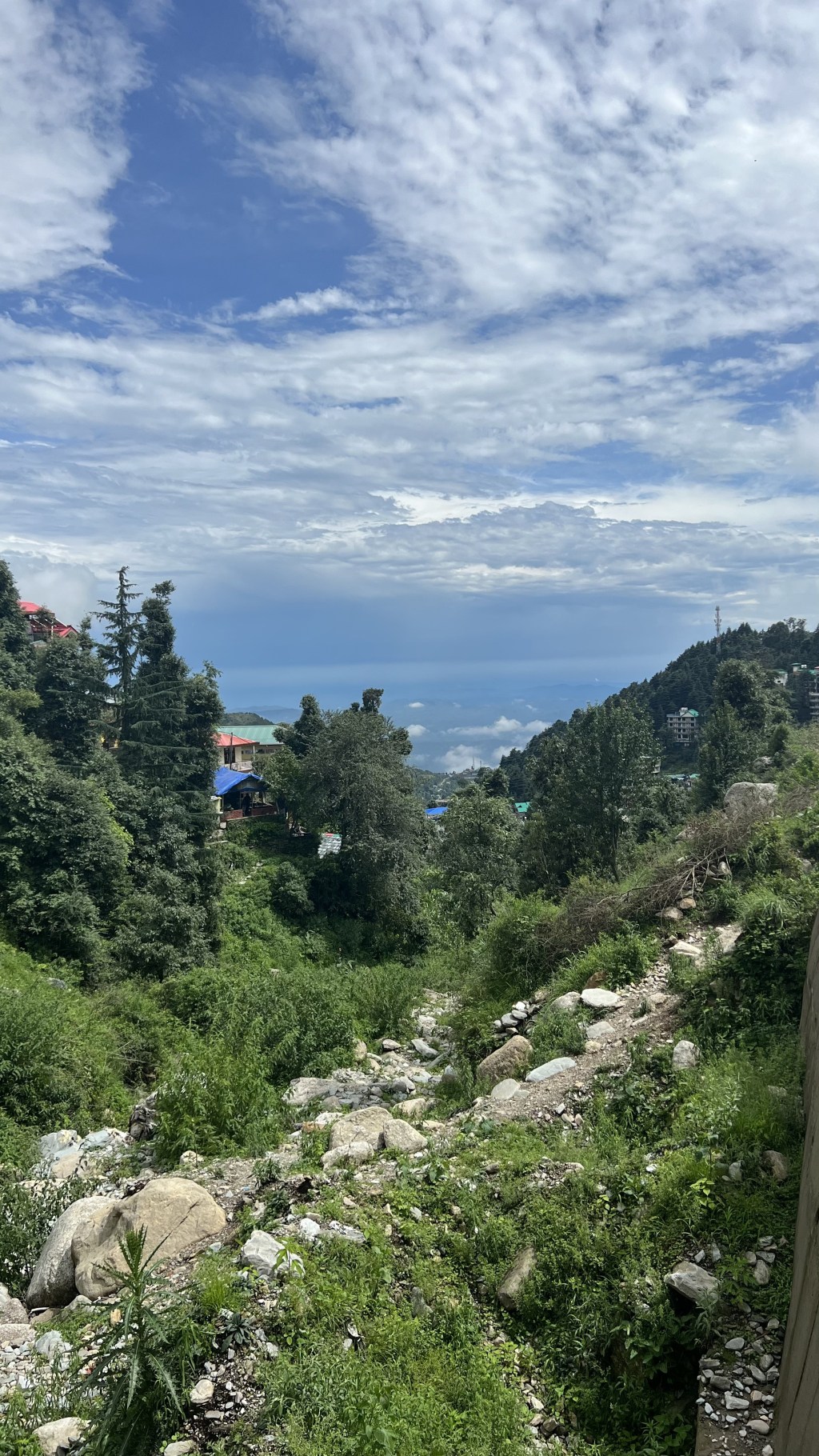
I spent the next few weeks monitoring the injury. With a yoga retreat planned less than a month away, I vigilantly took care of myself. I watched for swelling, listened to my body for pain and discomfort, tried to build up strength and mobility to heal consciously. I was determined (and impatient) to heal. With the exception of the occasional flare up of pain, which was always preceded by clear overexertion, my body started to feel better. When I finally made it to Dharamshala and stared out at the landscape of the lush Himalayan mountains, the pain of my new injury was as faint as a distant memory (for about twelve hours).
There was a chill in the air on the first morning of the retreat. Cold cloud vapor distorted the view from the top of the mountain. At 6:15, we each settled into the space on our mats, bracing ourselves for the hour and a half of stillness that was to follow. We began with a breathwork sequence to prepare for meditation. Lacking the strength to keep it upright for long enough, my right arm became leaden when I held it in place for alternate nostril breathing. When I could no longer go on, I placed my arm in my lap, resting momentarily with every intention to continue. As I gathered the courage to lift it again, the soreness on the left side of my back escalated from a dull ache to severe pain. My shoulders curled downward with every breath. They were heavy with pain and my spine was unable to bear their weight. After an hour of meditation, the agony swelled to fill my entire awareness. It had become impossible to breathe. Tears that had gathered beneath my closed eyelids dropped all at once when I finally opened my eyes.
Everyone filed out of the room one by one to reset before yoga but I couldn’t move. Defeated and desperate for support, my body melted as I leaned against the cool brick wall before class began. Unable or unwilling to make small talk, I watched silently as the yoga instructor entered the room. Shubham introduced himself and I sat up straighter, trying to be polite. He asked if I had any injuries he should know about before beginning classes. I laughed coldly, still in agony, and described them both curtly. I explained that I had an old injury in my right shoulder that had never fully healed, which put a strain on my left shoulder that I recently injured.
“How did you get hurt?” he asked, his tone and expression both neutral, free of judgement. “I was hit by a car,” I recited, emotionless, like rote memorization. He told me that he had been also. We talked casually about our experiences until he described the severity of his injuries and the nature of his recovery. My face suddenly felt hot. I was flooded with shame, embarrassed by my pain and the way I felt sorry for myself because of it.
The rest of the class trickled in one by one, setting up their yoga mats and beginning to stretch. When everyone had arrived, Shubham and I concluded our conversation before he took his place at the front of the deck. He calmly called for everyone to start in a comfortable seated position, chanting “om” as the class joined in, spines straight and hands together at heart center. Still tender, I croaked my om with as much effort as I could muster.
We began the class with our legs outstretched, flexing and extending our toes, then our feet, rolling our ankles clockwise and counterclockwise, moving up through the body slowly and methodically. “Roll your shoulders back,” Shubham eventually commanded as he walked around the room. I began the motion and heard the loud crunching of my collarbone as I moved my shoulders in a circular motion. Tears streamed down my cheeks without warning. I maintained an even breath, crying silently as we continued to move through simple stretches for the upper body, hoping no one would notice. Still, ever observant and compassionate, Shubham walked toward me. He cautioned me not to push if anything was painful. Embarrassed, I mumbled, “no pain” through a half smile and closed my eyes so we could proceed.
Every movement afterward required strenuous effort. I had always been proud of the amount of suffering I could silently endure but, for the first time, I felt broken – like I had been robbed of a life free from chronic physical pain. My tears intensified as class continued. As I breathed in downward dog, I recalled my initial return to yoga after the accident, remembering how challenging it was to start again after the muscles in my arm completely atrophied. I recognized the fear I had been so accustomed to carrying that I wasn’t even aware of its presence anymore. My body had adjusted to the weight of it. Tears fell in droplets onto the mat, one by one, as I folded my torso slowly over the length of my legs.
There was so much emotion that was intrinsically linked to the pain in my shoulders, embedded in my bones as they welded themselves back together. I cried for the first three days of my yoga retreat, feeling tears pool in my ears every time I’d settle in for savasana at the end of class. I sat with my fear, literally, day in and day out in grueling meditations that challenged every single part of my body. I mourned, finally, the version of myself that I might have been if I had never been hit by a car (not that I could ever know who she’d have been but I recognize that I can no longer compare my body to hers). Mine, pain and scars and all, is still a miracle.
 nathalie shushan
Leave a reply to for the love of acupuncture – shoooshhhh travels Cancel reply